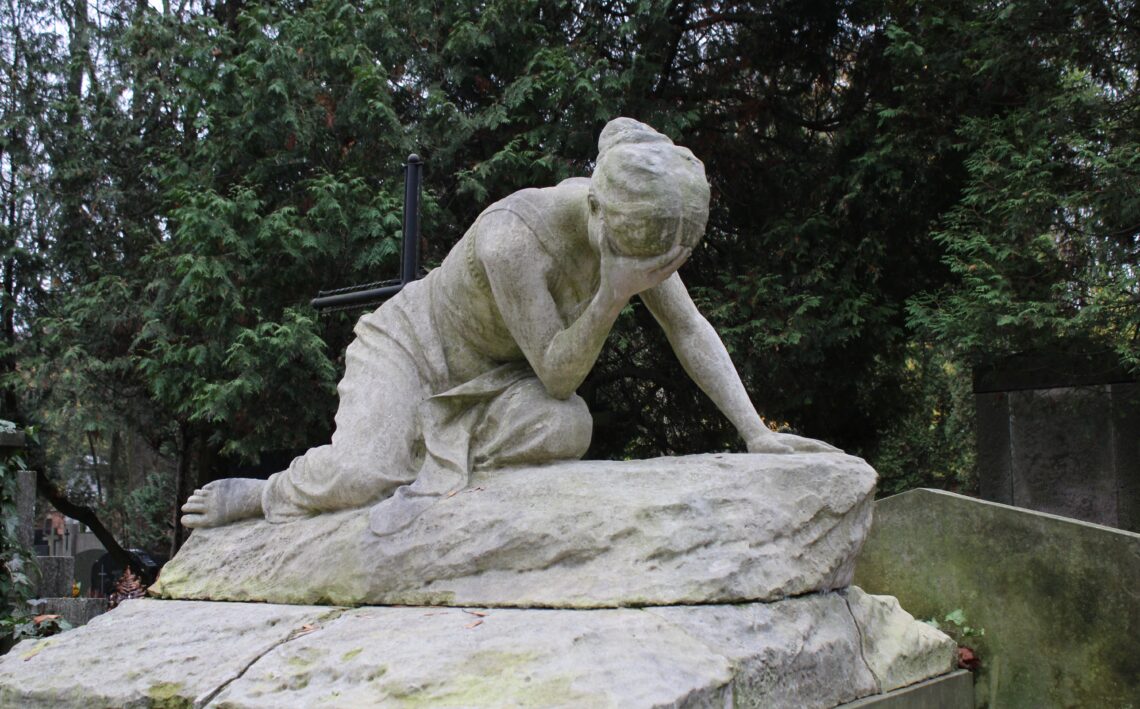
Stare Powązki Cemetery in Warsaw: Extraordinary History, Art & Visitor Guide
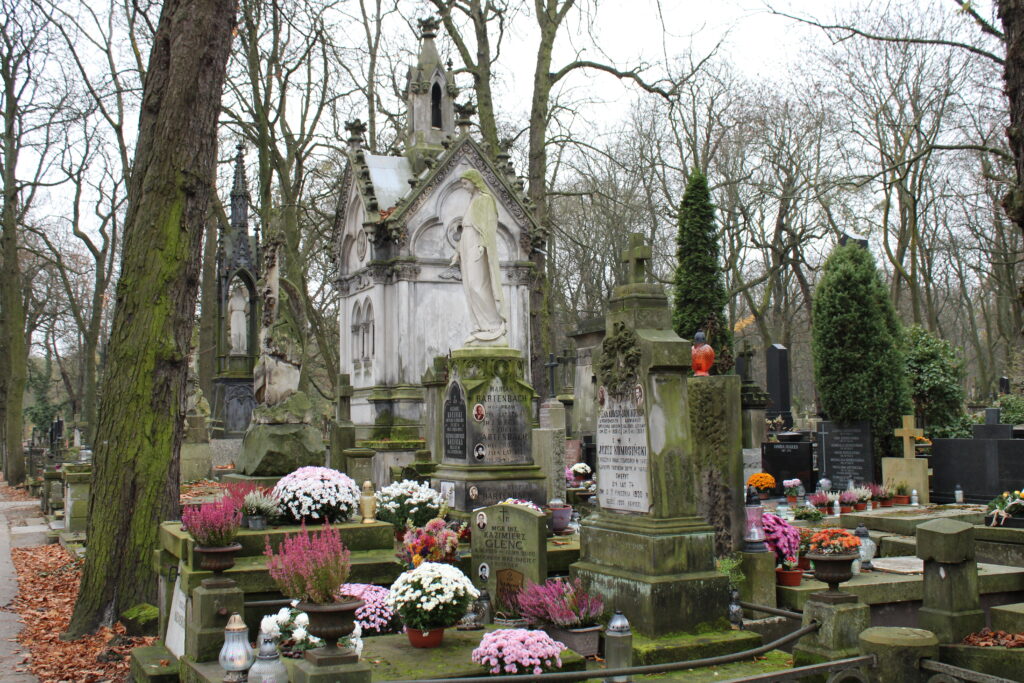
Stare Powązki Cemetery is Warsaw’s oldest necropolis and one of the most remarkable burial grounds in Poland. Often described as “Warsaw’s Père-Lachaise,” in reference to the famous Père-Lachaise Cemetery, it is far more than just a cemetery. It is an open-air gallery of sculpture – a place where the history of Poland is written in stone.
For over two centuries, it has been the final resting place of artists, writers, scientists, politicians and soldiers whose lives shaped the cultural and national identity of Poland.
How to get to Stare Powązki?
The cemetery is located at 14 Powązkowska Street, in Warsaw’s Wola district. Stare Powązki – also known as the Civil Cemetery – is separate from the nearby Powązki Military Cemetery and should not be confused with it. It is easily accessible by public transport and by car. The most convenient way to get there is by tram (lines 1, 22, 27, among others) or bus (e.g. lines 180, 409) – get off at the Powązkowska stop and after a few minutes you will reach the main entrance. The current timetable can be found on the official Warsaw Public Transport (ZTM) website.
Those travelling by car can use the parking spaces along Powązkowska, Okopowa, Tatarska and Ostroroga streets, although on weekdays the area can be very crowded and finding a free space can be difficult. It is also worth remembering that the car parks are located in a paid parking zone.
The cemetery gates are open daily – from 7:00 a.m. to 8:00 p.m. in the summer and from 7:00 a.m. to 6:00 p.m. in the winter. The main entrance from Powązkowska Street leads through the St. Honorata Gate by Leopold Wasilkowski, which is one of the architectural symbols of this unique place.
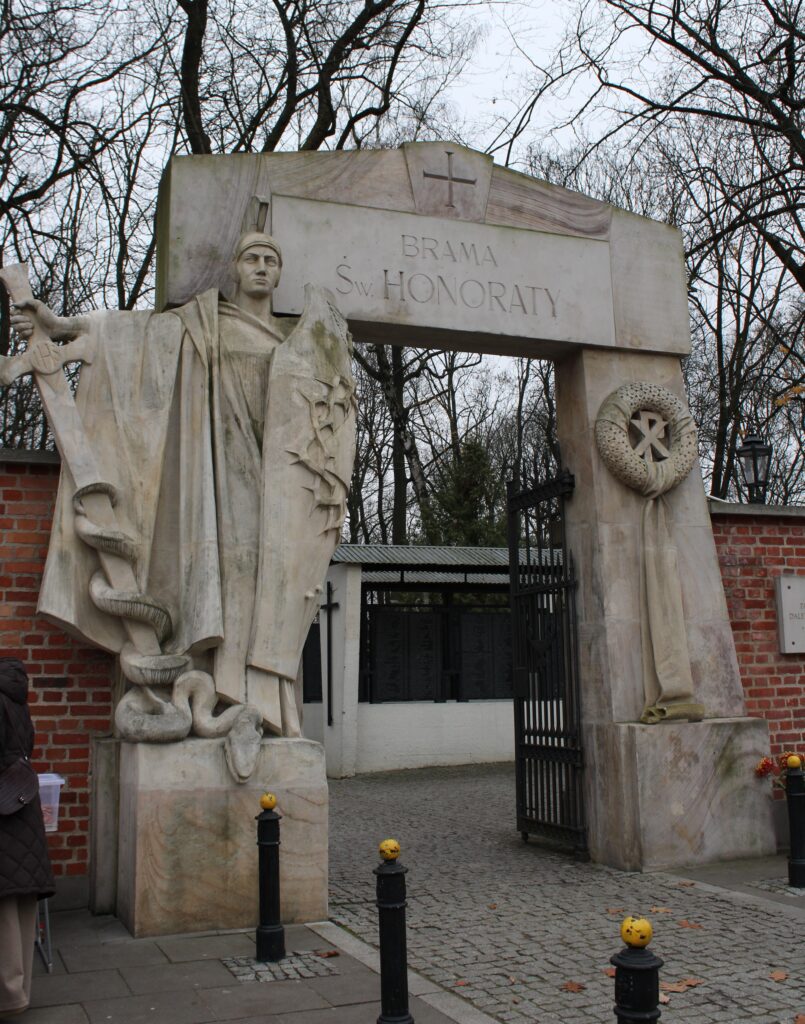
The History of Stare Powązki Cemetery
The cemetery was officially established on 4 November 1790 and solemnly consecrated on 20 May 1792 in the presence of King Stanisław August Poniatowski, the last monarch of the Polish-Lithuanian Commonwealth. In the same year, the Church of St. Charles Borromeo and its catacombs were built next to the cemetery, designed by royal architect Dominik Merlini.
Originally covering just over two hectares and located beyond the city limits, the cemetery expanded as Warsaw grew. Today, Stare Powązki spans approximately 43 hectares, forming a vast and atmospheric labyrinth of avenues, chapels and historic tombs.
Nearly a century after the establishment of Powązki, in 1884, a second Warsaw cemetery was opened – in Bródno. From that moment on, Powązki Cemetery became a more elite place, where burial was associated with prestige, but also considerable expense.
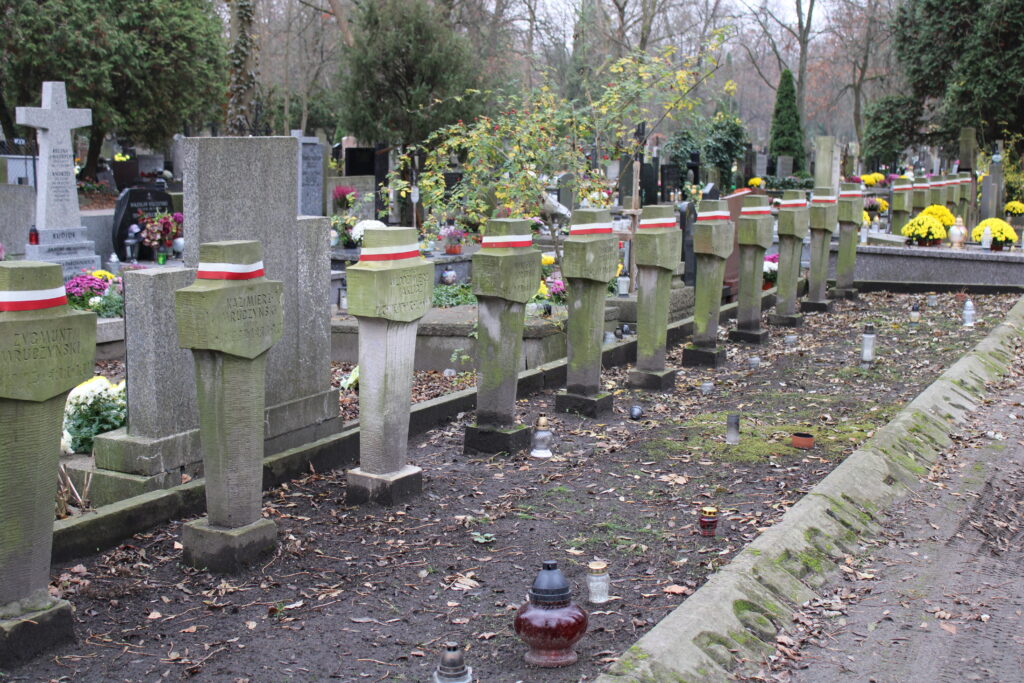
Stare Powązki Cemetery witnessed many key events and battles in Polish history, including the November Uprising (a Polish national uprising against the Russian Empire in 1830) and the Warsaw Uprising (an armed uprising against the German forces occupying Warsaw in 1944). During World War II, the cemetery was repeatedly bombed. Tombs became shelters, hiding places and even secret weapons storage sites. The necropolis itself turned into a battlefield.
In 1965, the necropolis, together with the church and catacombs, was added to the register of historic monuments in recognition of its unique historical and artistic value. In 2014, Stare Powązki was officially designated a historic monument by Polish President Bronisław Komorowski.
Avenue of Merit
In 1925, following the death of Nobel Prize-winning novelist Władysław Reymont, the Avenue of Merit was established along the southern wall of the catacombs. This distinguished section of the cemetery is reserved for individuals who made an exceptional contribution to Polish culture, science and public life.
Among those buried here are actor Gustaw Holoubek, film director Krzysztof Kieślowski, the parents of Fryderyk Chopin, poet Zbigniew Herbert and composer Stanisław Moniuszko. The cemetery is also the final resting place of humanitarian Irena Sendler, who rescued around 2,500 Jewish children from the Warsaw Ghetto during World War II, tenor Jan Kiepura and President of Poland Stanisław Wojciechowski.
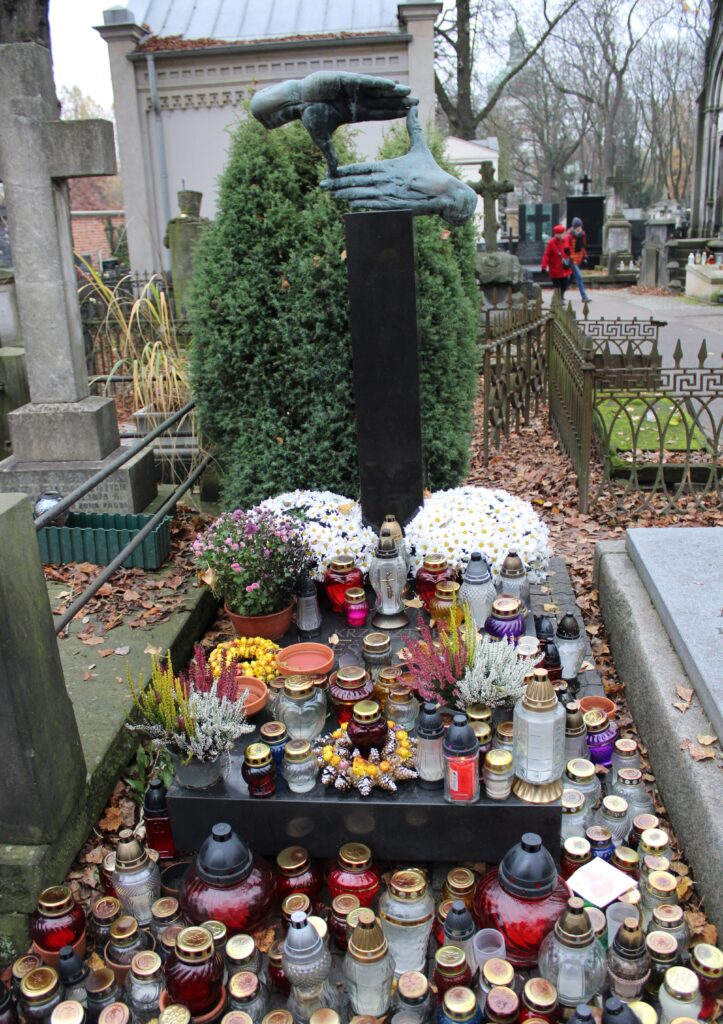
Art and memory – about the remarkable monuments of Stare Powązki Cemetery
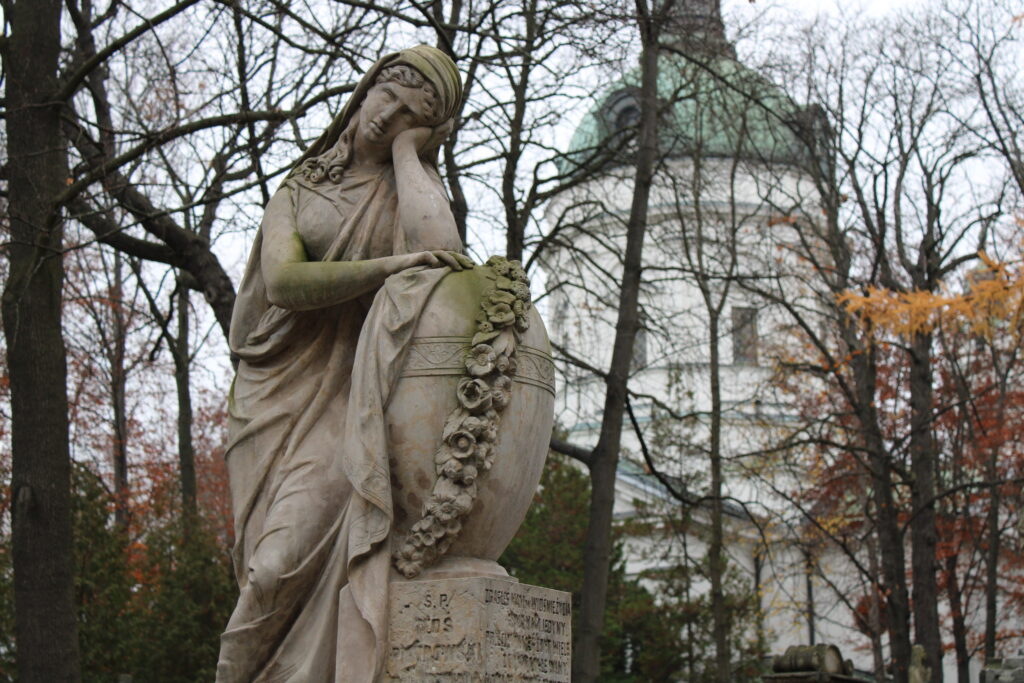
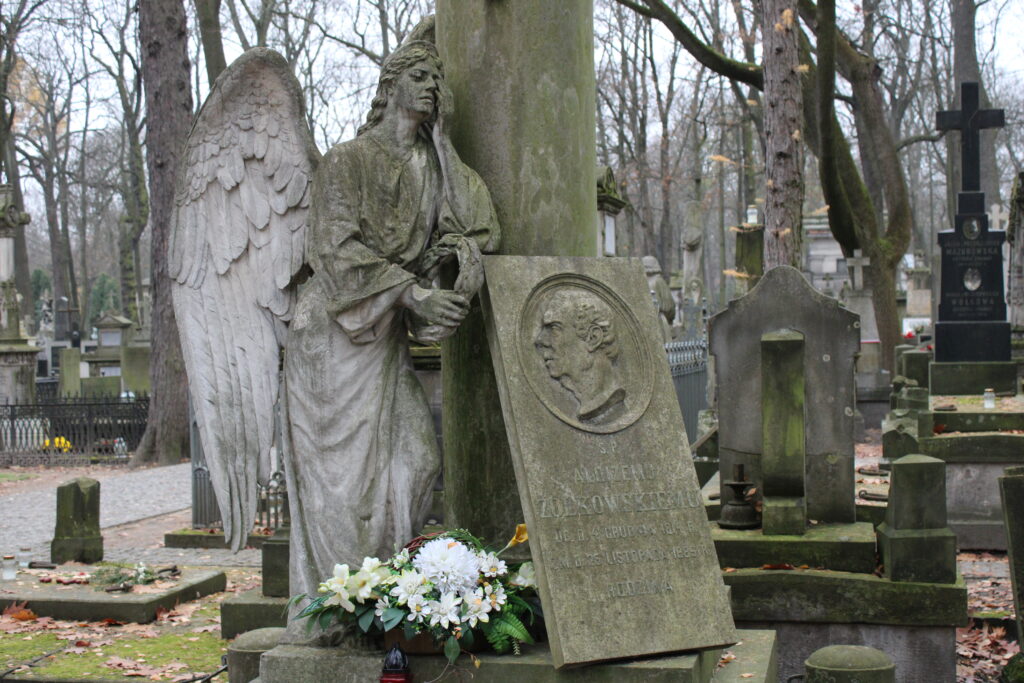
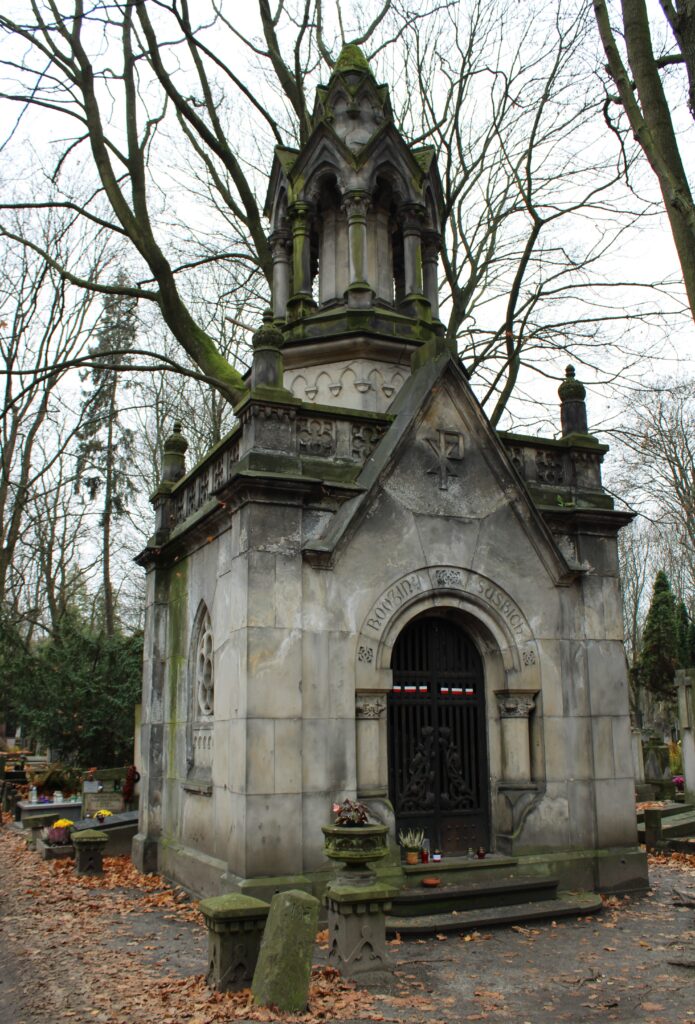
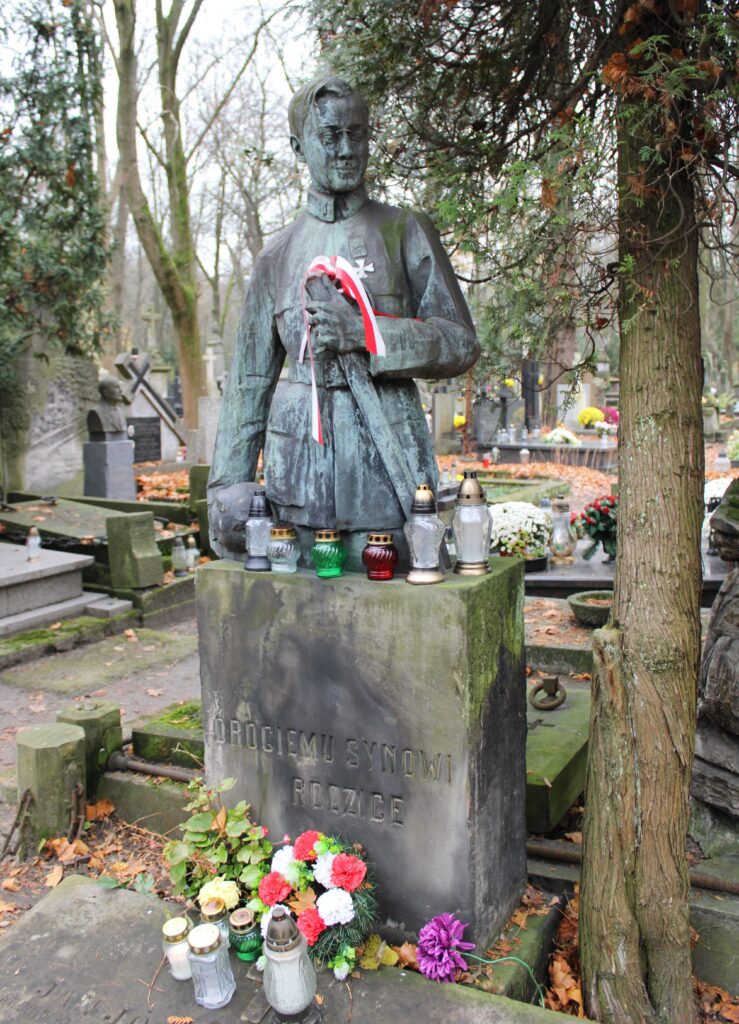
It is at Stare Powązki Cemetery that we can admire sepulchral art, or tomb art. The beautiful monuments and sculptures were not created by accident – their craftsmanship reflected the status and artistic sensibility of the families who wanted to honour the memory of their loved ones in this way, but also to express their patriotism. Today, it is said that the largest collection of Polish outdoor sculptures is located at Stare Powązki Cemetery.
During the partitions, when Warsaw was under the rule of the Russian Empire (1815-1918), it was forbidden to erect monuments to prominent Poles on the streets or squares of the city. The cemetery became a sanctuary of memory – a place where monuments to heroes, artists and scholars could be legally erected. This is why Stare Powązki became a gallery of symbols and such an important place.
Over the years, the most outstanding Polish sculptors and architects have worked here: Andrzej Pruszyński (creator of the monument of Christ carrying the cross in front of the Holy Cross Church in Warsaw), Jakub Tatarkiewicz (a student of the famous Bertel Thorvaldsen) and Wacław Szymanowski (creator of the Chopin monument in Warsaw).
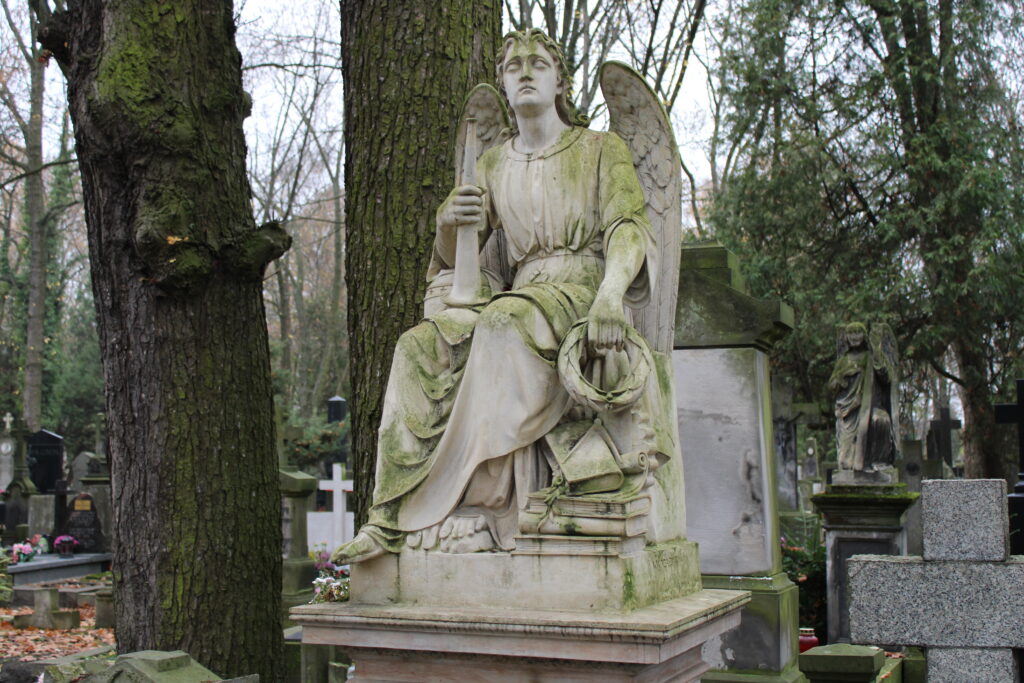
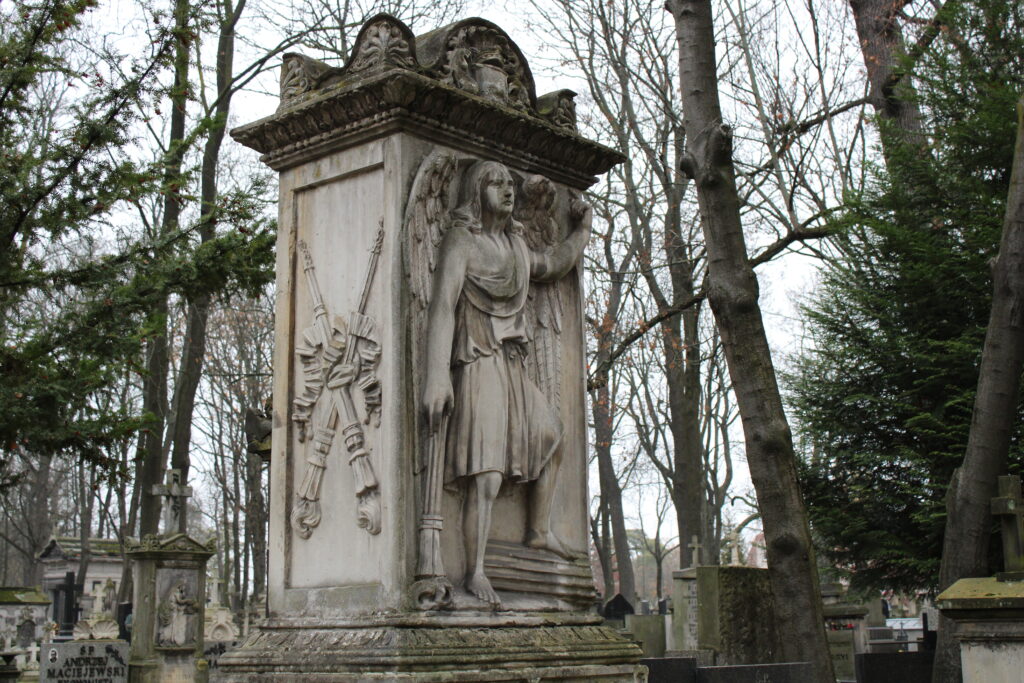
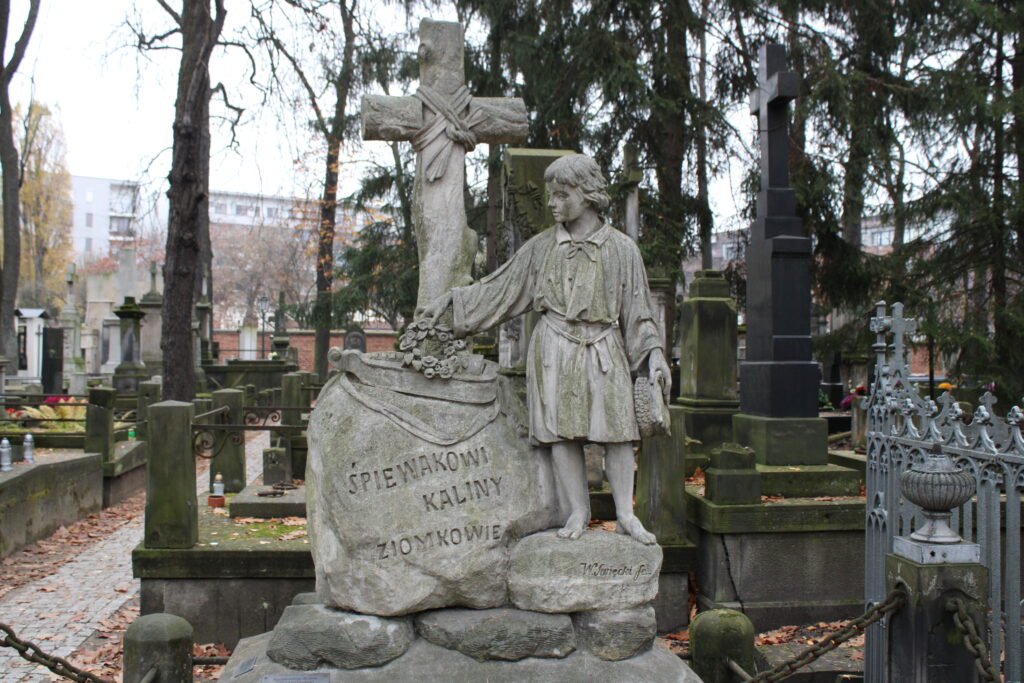
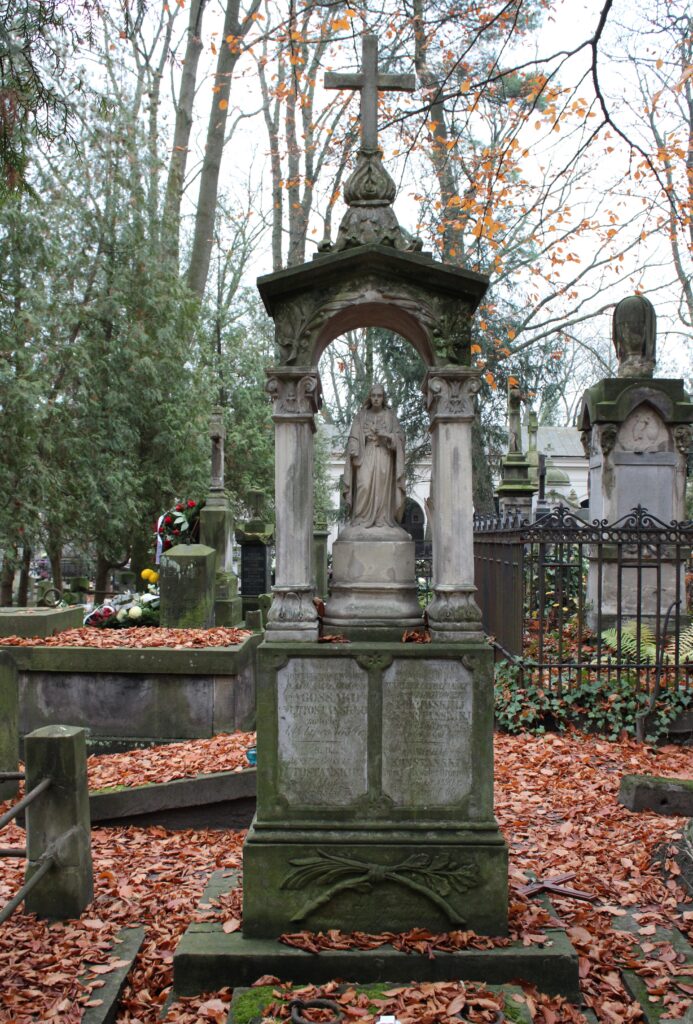
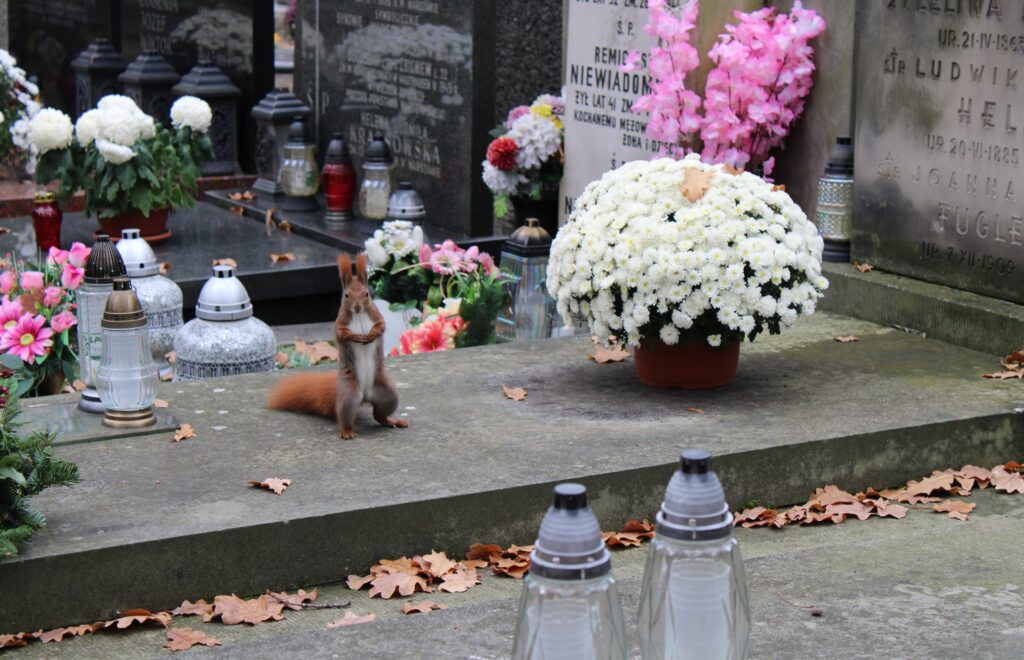
Stare Powązki Cemetery is worth visiting at any time of the year. In spring and summer, its tree-lined avenues offer shade and quiet reflection. In autumn, fallen leaves add a golden glow to the historic sculptures. Even in winter, the snow-covered tombstones create a solemn and almost poetic atmosphere.
However, the most evocative moment comes in early November, just after All Saints’ Day. Thousands of candles flicker across the cemetery, and graves are adorned with chrysanthemums and lanterns. It is an unforgettable sight and one of the most moving cultural experiences in Warsaw.


Zobacz również